Throughout the history of the world, people have continued to love and admire those that they believed were worthy enough to look up to; the concept of a hero has existed anciently and continues to be popular in today’s world. Those of the ancient world definitely define heroes in a different way than those of today; as time went on, one can say that the defining characteristics of a hero definitely has changed and evolved into something new. It is easy to decipher and understand a society by their concepts of heroes, for one can see the things that are valued the most from that specific society. Although the heroes of the ancient world have been seen to have some differences from those of the modern world, including their individual superpowers, the ancient and modern heroes were all loyal and physically attractive.
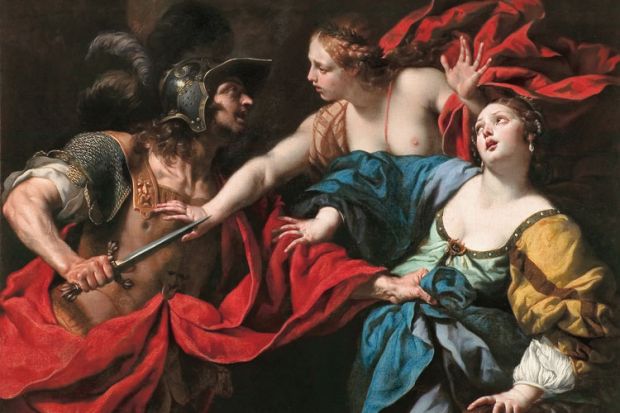
The Romans were loyal to their gods; they believed that following the will of their gods needed to be a major part of their lives. They felt that the gods’ will was more powerful than their own, and they chose to be faithful to them. The Romans are a loyal people, and have been seen to choose their gods over anything. Aeneas, a hero seen in ancient Roman history, is described as “pious Aeneas” throughout most of The Aeneid written by Virgil. Aeneas is a man of great worth, for he was the man who was described as the Trojan founder of Rome (Virgil 1). He was a man that listened to the gods in everything that he did. When the Trojans were being attacked by the Greeks in Troy, Aeneas was about to kill Helen, but then his mother, Venus, who is a god, comes and tells him that “it is not the detestable beauty of Tyndarean Helen or sinful Paris that is to blame…it is the gods” (Virgil 44). After this encounter, Aeneas chooses not to kill Helen, since he was told not to by the gods. It can be seen that the gods mend the fate of the mortals, and that being obedient to them is a highly valued trait of the successful heroes.
/cdn.vox-cdn.com/uploads/chorus_image/image/60096527/incrediblescover.0.jpg)
Just like the Romans, the heroes of the modern world are loyal, but not to “gods”, rather to their hearts. The heroes of today can be seen following what they believe to be right; they are loyal to the greater good, and will choose to fight and protect them. If a higher “being” or superior tells those heroes today something that goes against what they believe, they will most likely not obey their counsel. In The Incredibles, it can be seen that Mr. Incredible and Elastigirl are heroes admired by the people; however, eventually “supers” become banned/illegal by the government and are not allowed to perform and use their powers. In the story, Mr. Incredible decides to break the law and the “relive the glory days” and perform “public services” because he believes that it is right for them to use their powers to help those in need. Within this society, it can be seen that being loyal to one’s self is an important value and factor in society because it is what the individual believes to be right. The Incredibles believed that fighting for the greater good, even though it was illegal, was right.

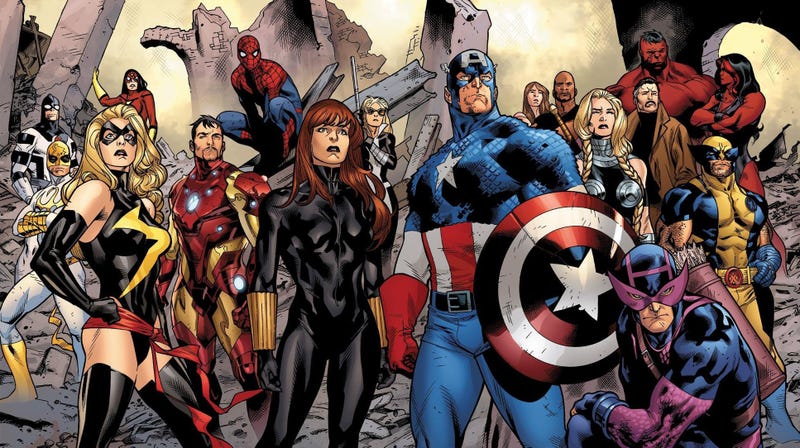
Along with being loyal, the ancient heroes and the modern heroes were those that were physically attractive. In today’s media, the people that the general public would usually look up to are those that are relatively appealing with good features. In The Avengers, Captain America is an icon loved by many in the movie, not only for his loyalty to the United States of America, but also because of his aesthetic, appeal, and attractiveness. His general outward appearance showed the public that he was capable of saving those who were in need. Iron Man from The Avengers also was a man who was known to be attractive; it was seen that a lot of females loved him, not only for his money, but for his good looks.

Similar to the heroes today, those from Rome were also known to be portrayed and seen as physically attractive. Augustus, also known as Augustus Caesar or Octavian, was the first emperor for the Roman Empire; he was seen as a hero in most people’s eyes because of his charisma and success (Grant). The artists of the Roman age manifested the concept of “idealism” through their works and created a piece called “Augustus of the Prima Porta.” In this piece of work, the artists portrayed their hero as an attractive young male with physically nice features; however, they may have portrayed him this way, but during this time, Augustus was around 70 years old, short, with bad teeth and spots all over his body. In The Aeneid, Aeneas was portrayed as an attractive man that was looked up to as a hero. Dido, talks about Aeneas positively and says, “his looks, the way he carries himself, his brave heart” (Virgil 52). Here it is seen that Dido is attracted to Aeneas and believes him to be a good man. The Romans believed that it was important to portray their heroes as physically attractive; this type of portrayal gave them more power.

Even though loyalty and attractiveness in heroes are important aspects that both the ancient and modern world have in common, one of the biggest differences that the two types of heroes have are their superpowers. It has been seen that the heroes of today have different powers that they can acquire or that they are born with. In The Avengers, Captain America started off as a small and skinny soldier that really could not do as much. Eventually, through an experiment and transformation, he became muscular and gained so much strength. On the other hand, the Incredibles family in The Incredibles, were all born with their superpowers of strength, elasticity, super-speed, and invisibility.
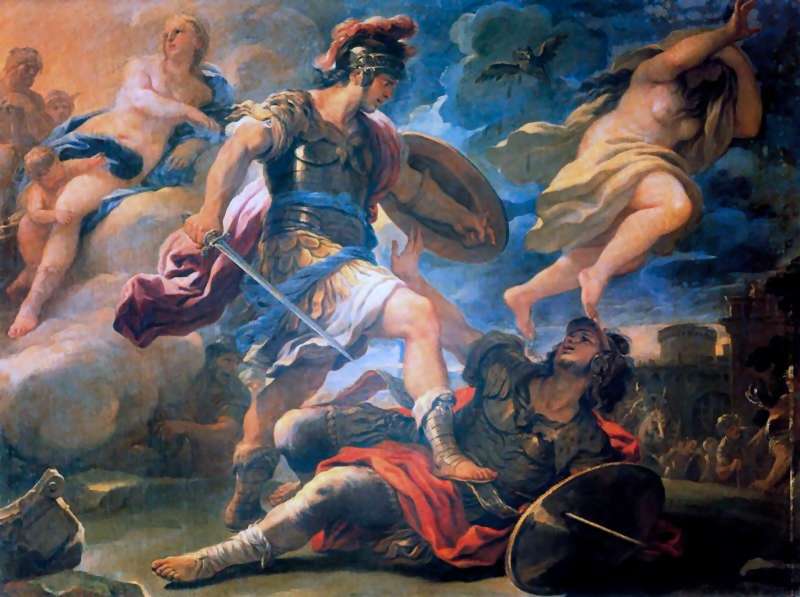
The heroes portrayed in the ancient world did not have superpowers compared to the Incredibles or Captain America. Instead, the heroes, like Aeneas, relied on their physical strength. The heroes in the ancient world were not blessed with powers or any special abilities such as invisibility or super-speed, but they were blessed with the powers from the gods. During multiple times, along with the mortals’ natural physical strength, the gods have been seen to help the mortals from above in order to bring to pass what they believed to be the outcome/destiny. Towards the end of The Aeneid, Aeneas is fighting Turnus, and Jupiter sends him help from above in order to weaken Turnus and defeat him in battle (Virgil 193). Aeneas was able to fight and defeat Turnus with his physical mortal strength, along with help from the gods.
The characteristics that the ancient and modern heroes portray show how different the two types are, and what the concept of a “hero” has evolved into. It has been seen that the ancient Roman heroes have different sources of motivation and values compared to the modern heroes; however, this source of motivation falls under the same umbrella manifesting a true characteristic of a hero that both parties portray: loyalty. Both parties have also been seen to have a good way of presenting themselves, by making themselves physically attractive and aesthetically appealing. The ancient and modern heroes are different in the things they can do/perform, essentially making them very distinct from each other; however, in both of these cultures, the hero has and will continue to be somebody the people can look up to.
Works Cited
Grant, Michael. “Augustus.” Encyclopædia Britannica, Encyclopædia Britannica, Inc., 12 Oct. 2018, http://www.britannica.com/biography/Augustus-Roman-emperor.
Virgil, and Stanley Lombardo. The Essential Aeneid. Hackett Pub. Co., 2006.

 Classic Moroni